What I want to say about vibe coding in December 2025. The progress compared to 6-12 months ago is quite impressive. Personally, I use Cursor, but it’s clear that thanks to competition between general models, we have access to constant improvements in all AI-assisted IDEs (development environments) through top models like GPT-5.2, Sonnet/Opus 4.5, etc.
If at the beginning or middle of this year you could vibe-code something quite interesting and powerful on the fly, it was hit & miss. The longer you work and the more complex the context, the higher the probability of hitting the goalpost. I had several instances where I got really excited about how I was managing to build something very cool and promising in literally 2-3 hours of evening work, and I’d think just one more hour and it’ll be perfect.
But then happiness slips through your fingers, because the system loses context and starts cycling around some bug or misunderstanding. You then fight with this for even more time until 3 AM (sunken cost fallacy) and then give up on it and roll back to something simpler.
So it felt like you were working with roughly a mid-level developer who works 100x faster than a human, and at first everything goes well and you’re racing forward, but from time to time they zone out and you don’t know at what point their memory was wiped or they were swapped with a junior/mid from another project who generates unnecessary stuff and rolls back your progress.
And now what – it confidently maintains complex context. Meaning it works somewhere like an upper middle to senior developer consistently, still 100x faster, but almost without unpleasant surprises with lost context on fairly complex projects.
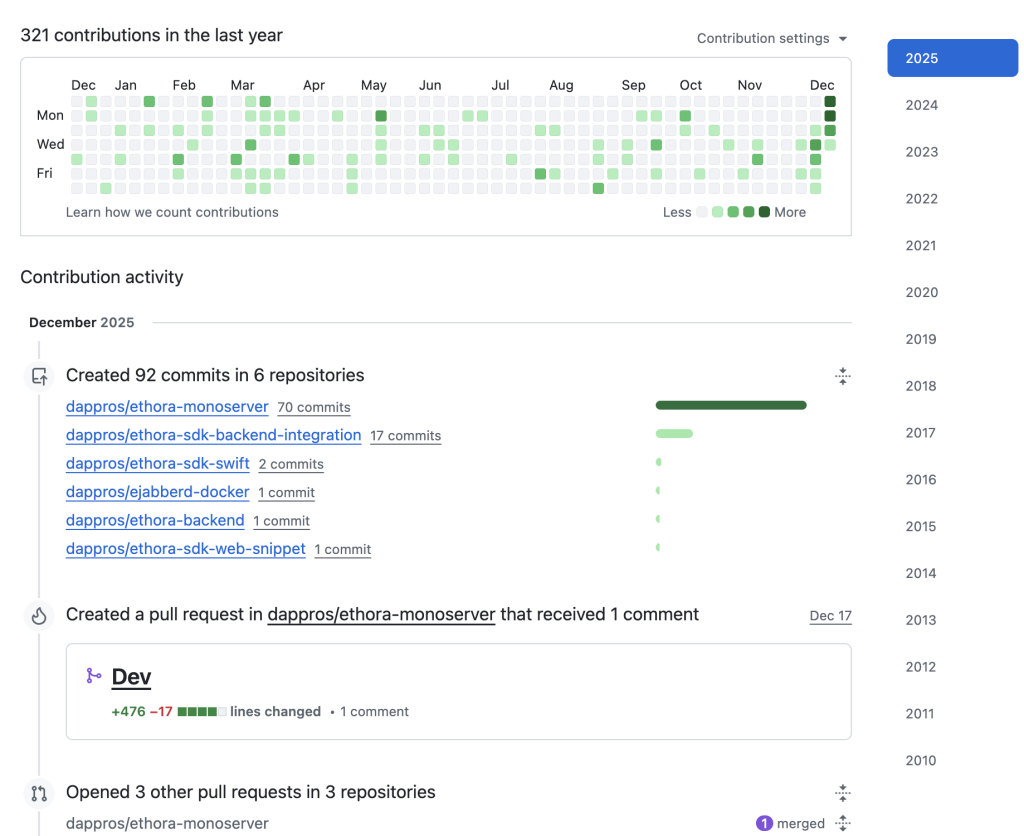
Yes, it can still mess things up for you, because it still doesn’t keep the entire project in its head (including its history and information beyond the codebase), doesn’t always keep attention on core principles, but it’ll be more like it creates an extra API endpoint or script, while the fairly complex task you set will be completed.
Yes, this doesn’t replace a development team – if you develop purely with vibe coding there will be a pile of technical debt and other problems, but I successfully managed to complete in a few evenings a complex task that the team has no time for, which would have taken a month or two, and on which I would have spent roughly the same amount of time explaining what needs to be done. In parallel, the AI and I fixed a bunch of warnings and errors, made eye candy out of what our system outputs to the console, and added automatic QA and healthcheck. We upgraded a bunch of packages and services to the latest stable versions. Over several evenings of work, I didn’t have the feeling that it was swapped on me or that it suddenly became much dumber. Once there was a suspicion that it dropped a bit in capabilities, I switched the model from Auto to GPT-5.2 and it became fine again.
The solution works. Of course, it wouldn’t be right to merge it into the main codebase “as is,” because it creates additional technical debt, and I can’t guarantee complete security and soundness of all architectural decisions.
But there’s a fully working module – which greatly simplifies the task for the team – you can (1) use what exists if needed “for now” for separate projects or clients, you can (2) try to review all my commits and merge them – or you can simply (3) use the ready module as a working prototype and write your own solution from scratch, which will save a ton of time at the planning and BA stage.
Drawing an analogy, I think that 2026 (and the rest of the twenties) will be the year not only of vibe-coding, but vibe-*, vibe everything: vibe-scientific research, vibe-astronomy, vibe-psychotherapy, vibe-marketing and sales, vibe-tactical combat management.